
Two Types of Workplace Injuries (And Why the Difference Matters)
A twisted ankle from a slip on the warehouse floor. Persistent back pain months after lifting a heavy box of files. Tingling in your wrist every time you sit down at your computer.
These are all examples of work-related injuries, in the sense that they’re injuries that happened in the workplace. But that doesn’t mean they’re all the same. In fact, workplace injuries generally fall into two categories, and understanding the difference is essential for getting the right care for your needs.

Upcoming FREE Workshops!
Mark your calendar for our upcoming workshops. Click below or call the clinic today to reserve your spot.
Knee Pain Workshop
5:00 pm • July 28
Rotator Cuff Workshop
5:00 pm • August 25
Acute Injuries: When One Wrong Move Changes Everything
When most people think of a “work injury,” they’re thinking of an acute injury. This type of injury occurs suddenly and is usually caused by a specific event or accident. Symptoms such as inflammation or pain appear immediately or shortly thereafter.
What Are Some Examples of Acute Work-Related Injuries?
- Sprained ankles from slips, trips, or falls
- Muscle strains from lifting heavy objects
- Shoulder injuries from sudden pulling motions
- Knee injuries from twisting or awkward landings
- Neck injuries following workplace accidents
How Do You Treat an Acute Injury?
The first step in addressing an acute injury is to protect the injured area while you work on restoring normal movement. While your first instinct might be to rest until the symptoms go away, doing so may actually delay your recovery. Instead, you want to work through a structured rehabilitation program with our physical therapists, who will help you safely resolve the current injury while reducing your risk of another.
This rehab program might include:
- Manual therapy to improve joint and soft tissue movement
- Guided stretching to reduce stiffness
- Targeted therapeutic exercises to restore mobility, strength, and function
- Education on safe movement and activity modification
- Progressive return-to-work programs

Chronic Injuries: The Slow Burn of Workplace Pain
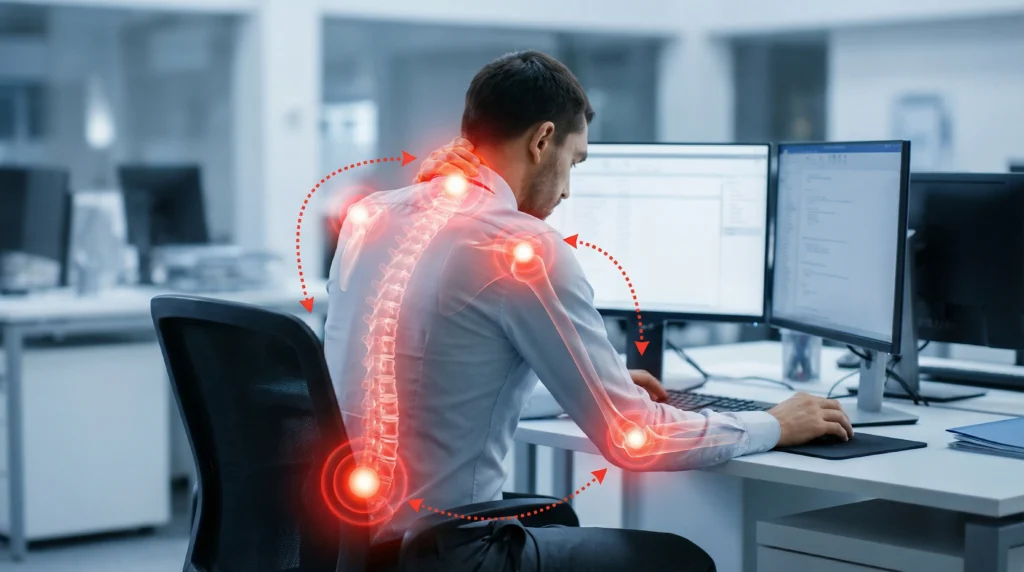
Although acute injuries tend to get all the attention, chronic work-related injuries are actually more common. These injuries develop gradually over time, often due to repetitive movements, poor postural habits, or prolonged positions that place ongoing strain on your body’s tissues. When these tissues don’t have time to heal properly, a chronic injury can develop.
As you might expect, chronic injuries tend to sneak up on people. They usually begin as mild, easily dismissed discomfort. But over time, the symptoms can become more persistent, leading to reduced mobility, changes in movement patterns, and difficulty performing routine work tasks.
What Are Some Examples of Chronic Workplace Injuries?
- Ongoing low back pain from prolonged sitting or repetitive lifting
- Tendon irritation from repetitive arm movements
- Carpal tunnel syndrome, which occurs when a nerve in the wrist becomes compressed
- Neck pain related to computer workstations
- Shoulder pain from repetitive overhead tasks
- Knee pain from repetitive squatting or kneeling
How Do You Treat a Chronic Injury?
Treating chronic injuries requires a different approach than treating an acute injury. Namely, it’s essential to address the factors that contributed to your injury in the first place. Your program might include:
- Acute pain relief with manual therapy or dry needling, both of which can help calm an overactive nervous system and temporarily desensitize irritated tissues so you can move more comfortably
- Movement retraining to identify and address any habits that are contributing to ongoing tissue stress
- Progressive strength training to improve pain, function, and physical capacity in the long term
- Ergonomic training designed to improve your workstation setup and reduce any prolonged positioning that might be contributing to your pain
- Long-term self-management strategies to help you take a proactive role in managing your symptoms once you leave our clinic. Examples might include activity pacing strategies, workplace modifications, or home exercise programs.
Take the First Step Toward Feeling Better at Work
Acute and chronic work-related injuries may develop differently, but both can affect your ability to work, stay active, and enjoy daily life. Whether you’re dealing with immediate pain after a slip and fall or have been struggling with nagging discomfort for months, early treatment at Advantage Physical Therapy can make a difference.
Our team will work with you to identify the source of your symptoms, develop a personalized treatment plan, and help you move with greater confidence. Schedule an appointment with us today and start moving toward a healthier, more active future.
The Hidden Costs of Untreated Work Injuries
When you’re hard at work, it can be tempting to ignore minor pain or assume it will go away on its own. But you definitely do so at your own risk! Untreated work injuries can often take a bigger toll than you might expect.
Five Reasons You Shouldn’t Ignore Your Symptoms
1. Pain Often Gets Worse Over Time
As you continue to perform the same tasks that caused the problem in the first place, your symptoms will gradually worsen. Before you know it, an occasional discomfort becomes a daily concern.
2. Your Body Starts to Compensate
When something hurts, your body naturally tries to protect it. Minor adjustments like shifting your weight may temporarily reduce discomfort, but they can place additional stress on other muscles and joints. Over time, this can lead to new aches and pains in other parts of the body.
3. Everyday Tasks Become More Difficult
If you leave work injuries untreated long enough, the reduced mobility and strength may start to affect non-work activities, like bringing in groceries or hitting the gym.
4. Recovery May Take Longer
The longer an injury is ignored, the more time it may take to recover. Pain, weakness, or movement limitations can become more established over time, but early intervention can help prevent that process before it gets out of hand.
5. You May Develop a Chronic Condition
Without proper treatment, some workplace injuries can contribute to long-term conditions like chronic back pain or carpal tunnel syndrome, which are often more difficult to treat.
Don’t Wait for a Small Problem to Become a Bigger One
Pain is your body’s way of signaling that something needs attention. If a work-related injury is affecting your comfort, mobility, or ability to perform daily tasks, schedule an appointment with the team at Advantage Physical Therapy to learn how we can help.
Why Hitting the Beach Is More than Just Fun in the Sun
Planning a beach trip this summer? You’d be surprised how much exercise you can get during a beach vacation. In between building sand castles and napping in the sun, try these fun health-boosting beach activities:
- Walk on the sand: While walking is an excellent exercise in and of itself, doing so on a sandy beach has additional benefits. The sand provides resistance that can help build strength in the muscles of your lower body.
- Splash in the waves: Make sure to spend time in the water, even if you aren’t swimming. Water’s density means your muscles have to work harder to perform simple movements, making ocean time a great workout.
- Relax in the breeze: Spending time in nature can help you relax and destress, which can actually impact your physical health, too! Take a few moments to breathe deeply and enjoy the sights, sounds, and scents of your surroundings–particularly before it gets crowded!
Want to ensure you’re injury-free and ready to make the most of your time on the beach? Schedule an appointment with Advantage Physical Therapy today!
Patient Success
“I first came to Mrs. Blayne with all kinds of issues. She made me feel strong and comfortable as we began to progress, not to mention we both are Texas girls at heart. I believe that’s why we worked so well together. When my time came to work with Ms. Ashley I was scared because Mrs. Blayne had mentioned she works you hard!!! However she was very sweet, patient, and understanding. I am glad she worked with me here and to also keep good form in the gym. I wish I could take both with but unfortunately, I can’t. Hope her next patient loves them as I did. Thank you!” – Alexandra
Share the Love
Help others discover us by leaving a quick review and sharing your thoughts. Your feedback helps us grow and keep improving—thank you for being part of our community!