

Common Sources of Hip Pain (And What We Can Do About Them)
Have you noticed a persistent discomfort in your hip? Is impaired hip mobility making it difficult for you to handle day-to-day tasks? Hip pain isn’t something you have to live with. But to resolve your pain, you’ll need to identify why you’re experiencing pain in the first place.
At Advantage Physical Therapy, our team of musculoskeletal experts can help you determine the root cause of your hip pain. Whether it’s an underlying injury or a chronic condition like arthritis, we’ll get you the answers you need — and the relief you deserve!
Today, we want to explore some common causes of hip pain and give you some insight into how physical therapy can help. But if you’re currently dealing with hip pain, your best bet is to call us to schedule an initial consultation. Our team can give you personalized guidance to return to an active, healthy lifestyle!

Why Do My Hips Hurt? Common Hip Injuries and Conditions
Osteoarthritis (OA): If you’re an older adult, your hip pain might stem from osteoarthritis, which occurs when the cartilage in a joint starts to degenerate. The hips are one of the more common locations for OA. Symptoms include…
- Pain in the hip and/or groin
- Stiffness in the hip joint, especially after you haven’t moved it for a while
- A sense of weakness in your legs
Hip Impingement: Your hip is a ball-and-socket joint. When the ball part of the joint pinches up against the socket part, you can develop hip impingement. It’s most common in young, active people. Watch out for…
- Pain in the hip joint and discomfort elsewhere in the general area (groin, thighs, lower back)
- Sharp stabbing pain when using your hip (i.e., squatting, running, etc)
- Symptoms that gradually develop over time
Hip Labral Tear: Your labrum is a ring of cartilage that protects your hip socket. A labral tear occurs when that cartilage tears, often due to overuse or a hip impingement. Symptoms include…
- A persistent, dull ache that feels like it comes from deep inside your hip
- Sharp, stabbing pains when using your hip
- Clicking or popping sounds when using your hip
- A feeling of instability in the hip
Hip Strain: A hip strain occurs when the muscles or tendons that support your hip joint become damaged. Your exact symptoms will vary somewhat based on the severity of the strain, but in general, you can expect…
- Pain, especially when using the affected muscle
- Swelling
- Limited range of motion
- Muscle weakness
Hip sprains can also occur, but they tend to be rare. A sprain affects the ligaments in your hip (the tissue that connects the joint). Symptoms are similar to a strain, but you might also experience a sense of the joint buckling under your weight.
Exercise of the Month
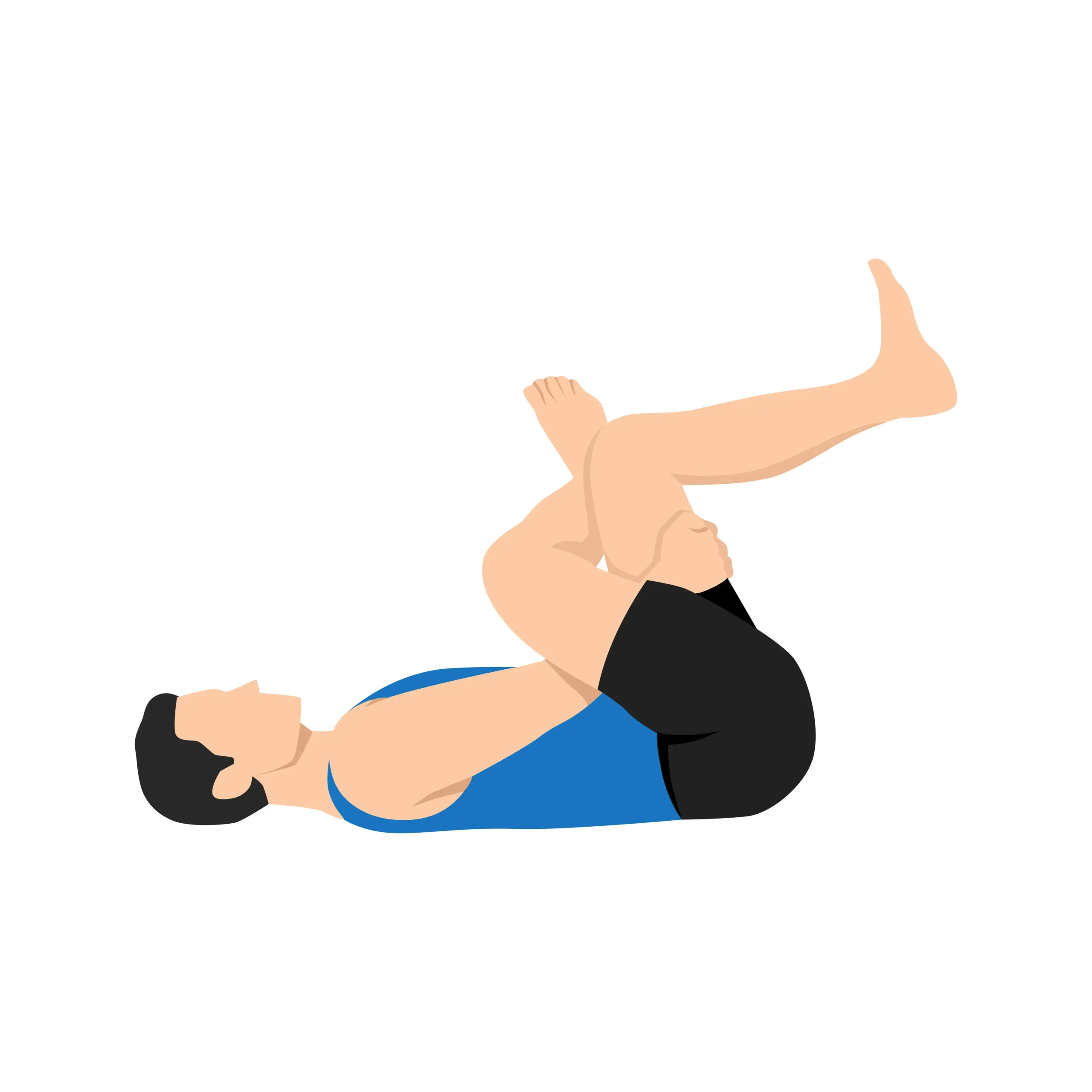
Figure Four Stretch
- Lie on your back on a yoga mat with your knees bent and your feet flat on the floor. Bend one leg and place your ankle on your opposite knee.
- Now grasp the back of your thigh and gently pull your knee toward you. Hold for 10 seconds.
- Release your foot back to the floor to return to the starting position.

Patient Success Story
“I had been doing squats and lunges at the gym. At first I used only weights but the pain was at a 10. Also, I was unable to do a child’s pose in yoga. I have been getting a combo of gel injects and PT. I would like to thank the team for providing me with strength building exercises one step at a time. I am now hiking, working and practicing yoga with so much less pain.”
– P.A.

What We Can Do to Address Your Hip Pain
Of course, identifying the cause of your hip pain is only the first step in addressing it. Once we know why you’re experiencing pain, we can develop a personalized treatment plan for your needs.
If you’ve suffered a hip injury, we’ll guide you through rehabilitation. Sometimes, physical therapy alone is enough to resolve the injury; other times, you may need medical intervention. Either way, here’s what you can expect:
- Drug-free pain management techniques (such as manual therapy)
- Early mobility work to help improve your range of motion
- Exercises to restore strength and stability
- Targeted balance and gait training
- Activity-specific training (especially if you’re an athlete)
If you’ve developed osteoarthritis, we can help you manage your symptoms and delay the progression of your condition. OA doesn’t have a cure, but physical therapy is considered a frontline treatment to help you avoid a total hip replacement. Your treatment plan may include…
- Manual therapy to help reduce pain and improve mobility
- A personalized exercise program to help you stay active (regular exercise is one of the best ways to manage osteoarthritis)
- Balance and gait training to help reduce your fall risk
- Activity modifications and other strategies to help you manage discomfort throughout the day
Take the First Step Toward a Pain-Free Holiday Season
No matter the reason for your hip pain, our therapists will find a solution that works for you. Call us today to schedule an appointment to get started on your journey to hip pain relief!

Service Spotlight: Total Motion Release
TMR was developed by physical therapist Tom Delanzo-Baker, who saw a definite need to incorporate data into a patient’s home program.
With this approach, the physical therapists could document patient response and see which exercises were the most beneficial. It starts with isolating the “issue of the session.” Then, FAB5 motions are compared right to left and ranked in order of significance. Next, exercises are performed to balance both sides using sustained holds and repetitions. Everything is recorded, so needed changes can be made.
While traditional thinking is that to strengthen the weak side you must exercise the weak side, that’s not so with TMR. It’s just the opposite. Since the body is a unified system, pain and movement in one area may be affected by another area.
TMR is an innovative, patient-centered approach that can be helpful in treating a wide variety of musculoskeletal dysfunction, such as stiffness, restrictions in motion of joints and weakness.
One of the main advantages of TMR over traditional therapy approaches is that it teaches you how to fix yourself, no matter where the pain is. This therapy looks at movement patterns to determine where restrictions are, and it uses good movement patterns to improve faulty ones. The bottom line is that you’re only using comfortable motions instead of painful ones. No equipment is needed. You can apply the motion, again and again, to make the pain go away. It puts you in control of the pain.
You can learn TMR from a physical therapist or even group sessions. Long-term results are also what makes this technique so great. It tests the five largest joints in the body-the spine, shoulders, hips, knees, and ankles using only six motions. Our physical therapists are knowledgeable, skilled, and experienced in this technique.
Upcoming FREE Workshops!
Mark your calendar for our upcoming workshops. Click below or call the clinic today to reserve your spot in one of our upcoming workshops.

Holiday Jam (A Great Homemade Gift!)
Ingredients:
- 1 package (40 ounces) frozen unsweetened strawberries, thawed or 2-1/2 quarts fresh strawberries, hulled
- 1 pound fresh or frozen cranberries, thawed
- 5 pounds sugar
- 2 pouches (3 ounces each) liquid fruit pectin
Directions:
- Grind strawberries and cranberries in a food processor or grinder; place in a Dutch oven. Add sugar.
- Bring to a full rolling boil; boil for 1 minute. Remove from the heat; stir in pectin and return to a full rolling boil. Boil for 1 minute, stirring constantly. Remove from the heat.
- Cool for 5 minutes; skim off foam. Carefully ladle hot mixture into hot half-pint jars, leaving 1/4-in. headspace. Remove air bubbles; wipe rims and adjust lids. Process for 10 minutes in a boiling-water canner.
You may qualify for covered physical therapy from the clinic you trust!
Take charge of your health today and make the most of your insurance benefits! If you’ve already met your deductible this year or have funds left in your HSA account, you can take advantage of our remarkable opportunity at FYZICAL. Starting now and continuing until the end of 2024, you can address your aches and pains at little to no cost. Don’t let these valuable benefits go unused!
But that’s not all. If you’re looking to enhance your strength and set yourself up for a fantastic 2025, we’ve got you covered. Don’t miss out on this incredible chance to prioritize your well-being and maximize your insurance benefits! Call FYZICAL today to start living a happier, healthier life.
Sources:
- https://www.choosept.com/guide/physical-therapy-guide-to-osteoarthritis-of-hip
- https://www.choosept.com/guide/physical-therapy-guide-hip-impingement-femoroacetabular
- https://www.physio-pedia.com/Hip_Labral_Disorders
- https://www.tasteofhome.com/recipes/christmas-jam/
- https://orthoinfo.aaos.org/en/diseases–conditions/hip-strains/